What Does the AI Whistleblower Warning Mean for the Rest of Us?
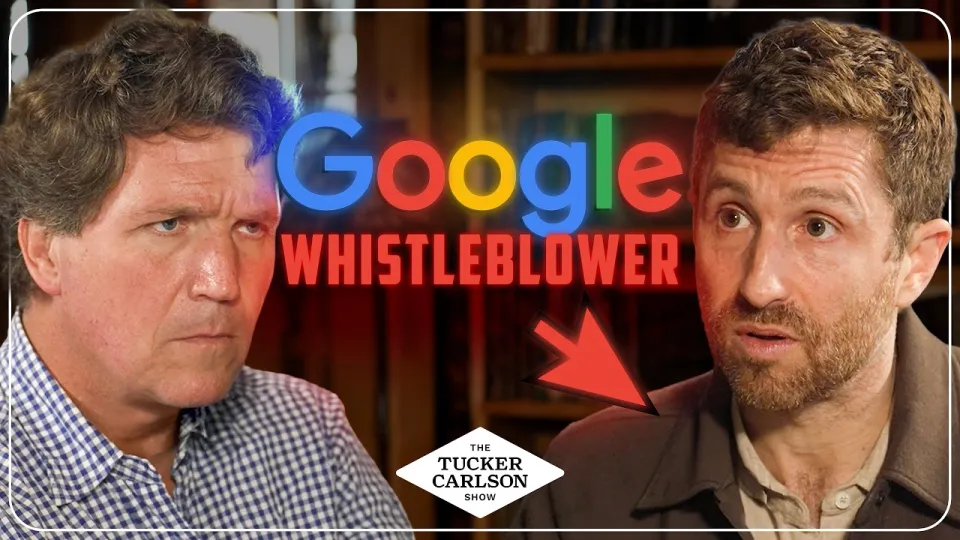
Video: Whistleblower Issues Dire Warning: Rogue AI, Hacking Nuclear Programs & Tech Oligarchs’ True Motives
You can order the same kind of articles for your own video to boost it on YouTube and Google. Just message the Telegram bot @sat_sit_bot. It writes articles around your video, embeds the video and publishes them on popular niche websites (no ads). Try it free: 50 articles on us.
The AI whistleblower warning is not really about machines going rogue on their own. Tristan Harris, a former design ethicist at Google and co-founder of the Center for Humane Technology, argues that the danger comes from human incentives: systems built to capture attention, concentrate power and outrun oversight do exactly what they were designed to do. His message is that accountability sits with the people and companies deploying AI, not with the software itself.
Who is Tristan Harris and why does his warning carry weight?
Harris spent years inside Google studying how design choices shape human behavior, then left to co-found the Center for Humane Technology, a nonprofit whose stated mission is to align technology with humanity's best interests. He regularly briefs heads of state, technology CEOs and members of the US Congress, and he co-hosts the podcast Your Undivided Attention. His public profile widened considerably with The Social Dilemma, a Netflix documentary released in 2020 that was seen by more than 100 million people in 190 countries and translated into 30 languages. That background matters because his critique of AI is an extension of a critique he has made for years about social media: the problem is not a single product but the business model that rewards engagement over well-being.
The real motives behind the AI race
The companies building frontier models are not neutral research labs; they are competitors in a market where scale, data and compute translate into power. Harris's argument is that this race creates pressure to ship faster than safety checks, regulation or public understanding can keep up. When leaders talk about existential risk while simultaneously accelerating deployment, the incentive structure, not the rhetoric, tells you what is actually being optimized. A useful way to read the debate is to ask three questions of any AI product: what behavior does its business model reward, who bears the cost when it fails, and what would have to be true for the company to slow down voluntarily.
Could AI hack nuclear programs or other critical systems?
One of the most alarming threads in the conversation is the possibility that AI could be used to probe, map or attack critical infrastructure, including nuclear command and control systems. The realistic risk is less about a sentient machine deciding to launch weapons and more about AI dramatically lowering the cost of finding software vulnerabilities, writing attack code and automating reconnaissance. Nuclear programs, power grids and financial systems are software-dependent, and software has bugs. Defenders already use AI for threat detection; the concern is that offense scales faster than defense when the same models are available to state and non-state actors alike. The practical takeaway for organizations is unglamorous: segment networks, patch aggressively, audit third-party code and assume that automated attack tooling is now cheap.
Why the race with China is a weak excuse for skipping safety
The geopolitical argument says that if the United States slows down, China will not, so safety must wait. Harris's framing pushes back on that logic by pointing out that a race dynamic is exactly what produces the worst outcomes: everyone cuts corners, nobody shares findings about failure modes, and the technology spreads faster than any guardrails. Competition is real, but it does not remove the need for shared red lines, transparency about model capabilities and independent evaluation. Treating every safety proposal as unilateral disarmament is a choice, not a law of physics.
Transhumanism, the god-complex and the new AI religion
A recurring theme in the discussion is the quasi-religious language that surrounds AI leaders: promises of transcendence, immortality and merging with machines. Harris treats this as a cultural and psychological phenomenon as much as a technical one. When a small group of unelected executives frames their work as humanity's destiny, normal democratic oversight starts to look like an obstacle. The same pattern shows up in the language of AI psychosis, where users form intense emotional attachments to chatbots and treat model outputs as revelation. That is a design and governance problem, not merely a user error, and it argues for clear labeling, limits on anthropomorphic design and better mental health safeguards.
What critics and skeptics get right
A common objection is that nothing here is rogue at all: these systems do exactly what humans engineered and deployed them to do, so the humans should be held accountable. That objection is correct and compatible with Harris's warning. Another frequent complaint is that AI is simply the latest tool of exploitation, following the same pattern as for-profit social media before it. Others point to the physical footprint of the buildout, from water use to electricity demand at data centers, as a reason for local scrutiny. A further worry is that lawmakers are too old, too slow or too captured to act. These are not reasons to dismiss the warning; they are the reason it is hard to act on.
What practical steps reduce the risk
- Demand transparency: support rules that require disclosure of training data sources, known failure modes and safety evaluations for high-risk deployments.
- Separate the hype from the product: evaluate AI tools by measurable outcomes, error rates and audit trails, not by the promises of their founders.
- Protect critical systems: treat automated vulnerability discovery as an existing threat and harden infrastructure accordingly.
- Watch the incentives: ask how a product makes money and what behavior that rewards before adopting it.
- Support independent oversight: fund evaluation bodies that do not depend on the companies being evaluated.
Where to find the organizations and partners mentioned
- Center for Humane Technology — the nonprofit co-founded by Tristan Harris, with resources and ways to get involved.
- Redmond Salt — partner offer referenced in the episode.
- Preborn — partner offer referenced in the episode.
- American Financing — partner offer referenced in the episode.
- Ethos — partner offer referenced in the episode.
Conclusion
The warning is less about a machine waking up and more about a system that rewards speed over safety and concentration over accountability. Harris's record at Google, his work with the Center for Humane Technology and the reach of The Social Dilemma give his argument more weight than the average doom forecast. The most useful response is not panic but pressure: on transparency, on independent evaluation and on the incentives that shape what gets built. This breakdown comes from the Tucker Carlson channel, where the full conversation with Tristan Harris is available. Readers who want to go further can visit the Center for Humane Technology to explore its research and tools.
Key takeaways
- Tristan Harris worked as a design ethicist at Google before co-founding the Center for Humane Technology, a nonprofit focused on aligning technology with human interests.
- Harris was featured in the 2020 Netflix documentary The Social Dilemma, which reached more than 100 million people in 190 countries across 30 languages.
- The core argument is that AI systems do what their designers and business models reward, so accountability belongs with the humans and companies deploying them.
- Harris briefs heads of state, technology CEOs and US Congress members, and co-hosts the podcast Your Undivided Attention.
- Concerns raised around the interview include AI-driven hacking of critical infrastructure, the race with China, data center growth and the cult-like optimism around AI leaders.
Questions & answers
Is the AI in question actually rogue or sentient?
No credible evidence supports the idea that current AI systems are sentient or acting outside human direction. The systems behave as designed and trained, which is why critics argue that responsibility belongs with the people and companies that build and deploy them. Claims of sentience tend to distract from concrete issues like incentives, oversight and security.
How realistic is the threat of AI being used against nuclear or other critical systems?
The realistic scenario is not an AI launching weapons on its own but automated tools making it cheaper and faster to find and exploit software vulnerabilities. Nuclear programs, grids and financial systems all depend on software that can be attacked. The practical response is stronger security hygiene, segmentation and independent audits rather than科幻-style speculation.
Does the AI race with China justify moving fast with fewer safeguards?
A race dynamic tends to produce exactly the outcomes safety advocates fear, because everyone cuts corners and nobody shares findings about failures. Competition is real, but it does not remove the case for shared red lines, transparency and independent evaluation. Treating every safety proposal as unilateral disarmament is a political choice, not a technical necessity.
What can ordinary users do about these risks?
Users can evaluate AI tools by measurable outcomes and error rates rather than founder promises, and can support transparency and independent oversight rules. They can also pay attention to the physical footprint of AI infrastructure, such as data center energy and water use, in local decisions. The broader point is to hold the humans behind the systems accountable rather than treating the technology as an autonomous force.
Source: Whistleblower Issues Dire Warning: Rogue AI, Hacking Nuclear Programs & Tech Oligarchs’ True Motives · Markdown version